How to Choose the Best Construction Jobs UK: Day Rates vs Permanent Roles in 2026
By Onboard Jobs on - 6 minute read time

It is 2026, and the UK construction industry is buzzing. With infrastructure investment and green energy projects driving a forecast growth of up to 3.7%, the demand for talent has never been higher. Whether you are a seasoned Site Manager or a newly qualified Electrician, you are likely facing the age-old industry dilemma: do you go for the steady, reliable permanent role, or do you chase the lucrative, high-flexibility day rate?
At OnBoard Jobs, we see both sides of the coin every day. Our construction job board is filled with both high-value contracts and career-defining permanent positions. But which one is right for you in the current climate? Let’s break down the 'Day Rate vs. Permanent' showdown so you can make the best move for your career and your bank account.
The State of Play in 2026
The landscape has shifted. We aren't just talking about bricks and mortar anymore; we’re talking about high-tech engineering jobs uk wide, from renewable energy hubs in the North to massive infrastructure overhauls in the South East. Skills shortages persist, which means you: the worker: have the upper hand. Employers are competing for your time, but they are offering very different 'lures' depending on how they’ve structured the role.
Option 1: The Day Rate (The Contractor’s Hustle)
For many, the day rate is the ultimate goal. It’s the promise of being your own boss, picking your projects, and seeing a much larger figure land in your bank account every week.
The Financials
In 2026, the rates are looking healthy. If you are looking for construction jobs uk on a contract basis, here is what you can roughly expect:
- Labourers: £120 – £160 per day.
- Skilled Trades (Sparkies, Plumbers, Joiners): £180 – £280 per day.
- Site Managers & Senior Engineers: £250 – £350+ per day.
On the surface, these numbers beat permanent salaries hands down. If you’re a Slinger in Oxford or a Plasterer in Hemel Hempstead, that daily 'cash-in-hand' feel is addictive.
The Pros
- Flexibility: Want to take the whole of August off? You can. Just don’t book a new contract.
- Variety: You get to work on different sites, meet different teams, and avoid the 'office politics' that can plague long-term staff.
- Tax Efficiency: Depending on your IR35 status (which is still the bane of every contractor's existence in 2026), there can be tax advantages to working through a limited company or a high-quality umbrella.
The Cons
- The 'No-Work, No-Pay' Reality: If you’re sick, you don’t get paid. If it’s a Bank Holiday, you don’t get paid. If you want a week in Ibiza, you’re paying for the flights and losing a week’s wages.
- Admin Overload: You’ll need to manage your own taxes, NI, and potentially pay umbrella fees. Check out our privacy policy if you're worried about how your data is handled when applying for these high-speed roles.
- Job Security: When a project gets mothballed, contractors are usually the first to go.
Option 2: The Permanent Role (The Career Builder)
Don't let the headline day rates fool you into thinking 'Perm' is the poor cousin. In 2026, the 'Total Package' is the king of the recruitment world.
The Financials
A permanent salary might look lower on paper: say, £45,000 for a role that would pay £250 a day as a contractor: but you have to look at the 'hidden' value. A permanent role includes:
- Paid Holiday: Usually 25+ days plus Bank Holidays. That’s over a month of being paid to relax.
- Pension Contributions: Your employer is literally putting free money into your retirement pot.
- Bonuses: Many engineering jobs uk now offer performance or project-completion bonuses that can bridge the gap between salary and day rate.
- Sick Pay & Private Healthcare: In a physically demanding industry, knowing you're covered if you take a tumble is priceless.
The Pros
- Stability: Your mortgage lender loves a permanent contract. If you’re looking to buy a house in 2026, 'Perm' is your best friend.
- Progression: Companies invest in their permanent staff. If you want to move from being an Electrician in Banbury to a Project Manager, a permanent role provides the training pathway to get there.
- Community: You become part of a team. You aren’t just 'the guy from the agency.' You’re part of the company culture.
The Cons
- Lower Immediate Cash: You won’t see that big weekly bump in your bank account.
- Less Variety: You might be stuck on the same site for two or three years. For some, that’s stability; for others, it’s a prison sentence.
Comparing the Two: A 2026 Reality Check
Let’s look at a quick comparison table for a mid-level tradesperson or engineer:
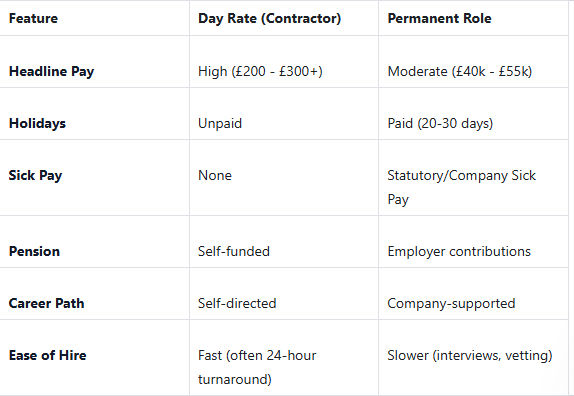
If you are looking for immediate work, like these Duct Mates in Farnborough or Electrical Improvers in Doncaster, day rates often provide the quickest entry point into a new project.
Why 2026 is Different
The 2026 construction market is heavily influenced by the 'Green Skills' gap. If you have experience in renewable energy, like an Electrician specialised in Renewable Energy, you are in a position to demand either a top-tier day rate OR a permanent package that includes significant perks.
Infrastructure projects are also longer-term now. The government’s shift toward 10-year rolling programmes means that even 'contract' roles are starting to look like long-term gigs, blurring the lines between the two employment types.
How to Choose: The OnBoard Jobs Strategy
So, Max is asking: 'Which one should I pick?' The answer depends on your life stage:
- The Young Gun: If you’re early in your career, go Permanent. Get the training, get the certifications, and let a company pay for your upskilling. Search our construction job board for 'Junior' or 'Assistant' roles to get your foot in the door.
- The Specialist: If you have a niche skill (like HVAC Estimating or high-end Plastering), Day Rates will likely net you the most money. You are a 'hired gun,' and the industry is willing to pay for your specific expertise. Check out this HVAC Mechanical Estimator role in Nottingham for a taste of what’s out there.
- The Family Person: If you have a mortgage and kids, the security of Permanent roles usually wins. The peace of mind that comes with health insurance and death-in-service benefits (morbid, we know, but practical) shouldn't be overlooked.
Finding Your Next Move
Whatever you choose, the key is using a platform that actually understands the dirt and the diesel. Unlike generalist job boards that list everything from bar work to brain surgery, OnBoard Jobs is dedicated exclusively to construction and engineering. We don't dilute our listings. When you search for engineering jobs uk, you get real engineering roles, not 'Software Engineer' positions that have nothing to do with a site.
Ready to see what 2026 has in store for you? Whether you want the freedom of the day rate or the security of a salary, we’ve got the boots-on-the-ground roles you’re looking for.
Don’t forget to register to get alerts tailored to your trade. Whether you are a Labourer in Thetford or a Project Director in London, your next big move is just a click away.
Final Tip: Always check the terms and conditions of any contract before signing. In 2026, the devil is in the detail: especially regarding IR35 and notice periods!